
Students from the University of Portsmouth’s School of Architecture, Art, and Design have recently undertaken a study of the historic Slaughterhouse at Royal Clarence Yard. Their research includes compiling historical information, fascinating facts, and comprehensive timelines, shedding light on this significant site.
A short history of the Slaughterhouse at the Clarence Yard
Maria Xuereb, student at the University of Portsmouth Master of Building Conservation, School of Architecture, Art and Design
Tutor- Ass.prof. Milena Metalkova-Markova
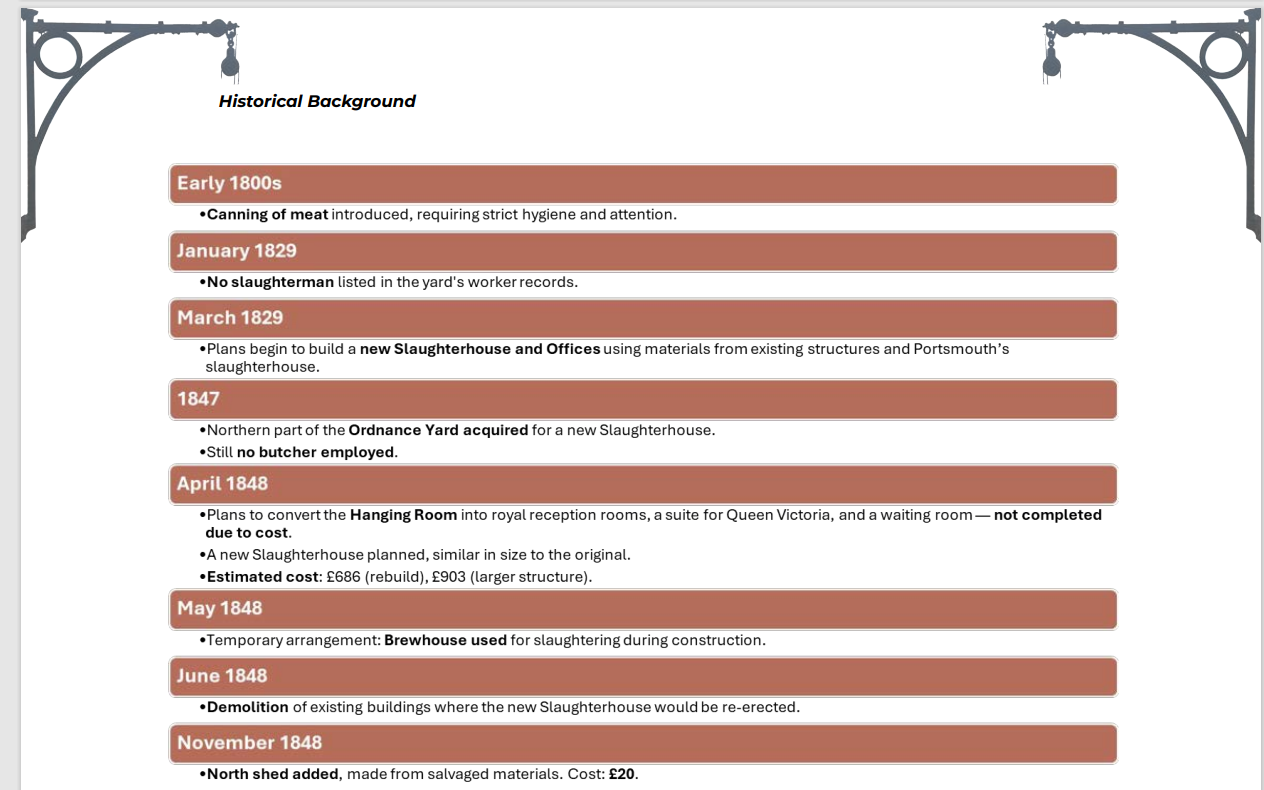
The initial building known as the ‘Tank Store’ was repurposed into the original Slaughterhouse in early 19th century. There was not any refrigeration, so animals were kept in an area called lairage to rest before slaughter. The carcasses would be hung up on the iron rails, for the butchering process. The meat would then be packed into casks. By 1847, discussions were initiated for the erection of a new Slaughterhouse along the Northern part of the Royal Clarence Yard.
The Tank Store was near the train station where Queen Victoria used to disembark. Due to its position, bad odours were always present during her arrival. The new Slaughterhouse was intended to be built with recycled material and fittings to keep all expenses to a minimum.
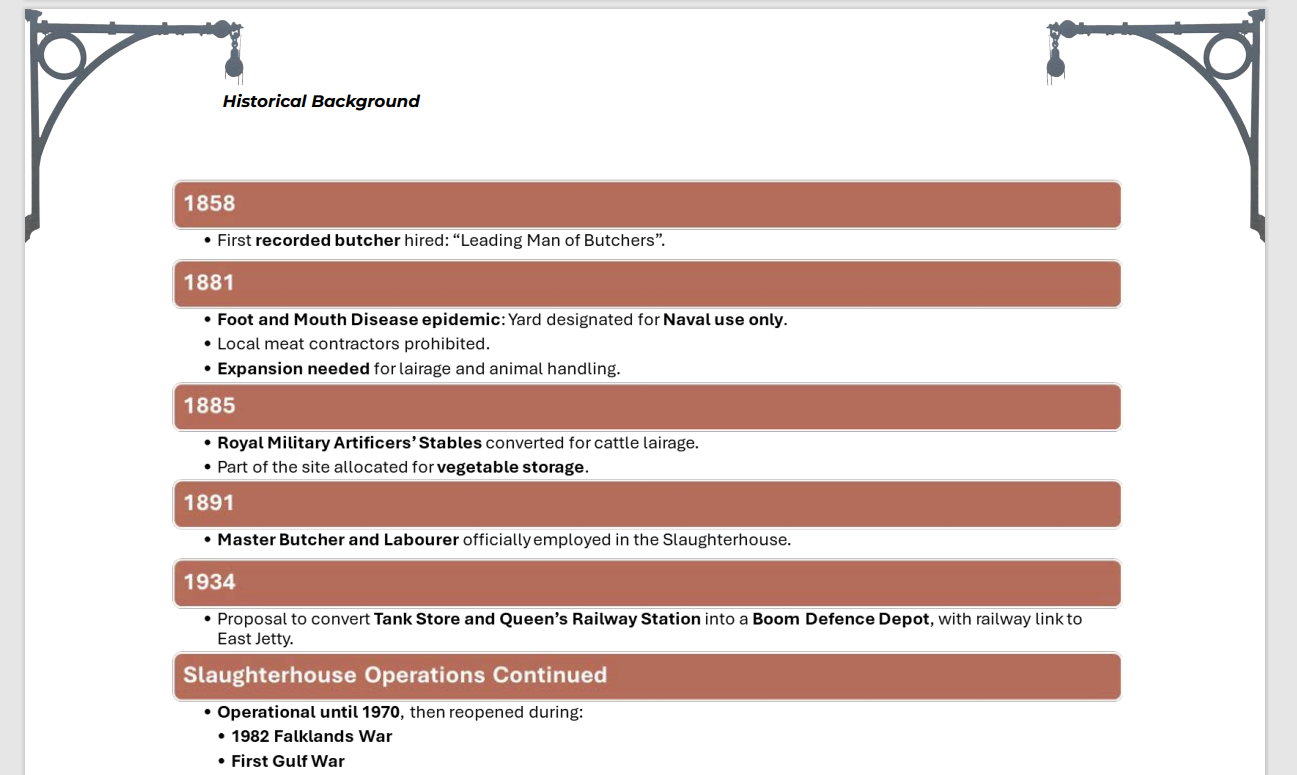
The addition of the North shed was added a year later in 1848, once again using old materials from the buildings that were taken down in the Yard. The first recorded butcher within the Royal Clarence Yard documents was in 1858.
Due to the spread of an epidemic of foot and mouth disease, it was ordered that the Slaughterhouse shall be serving only the Navy.
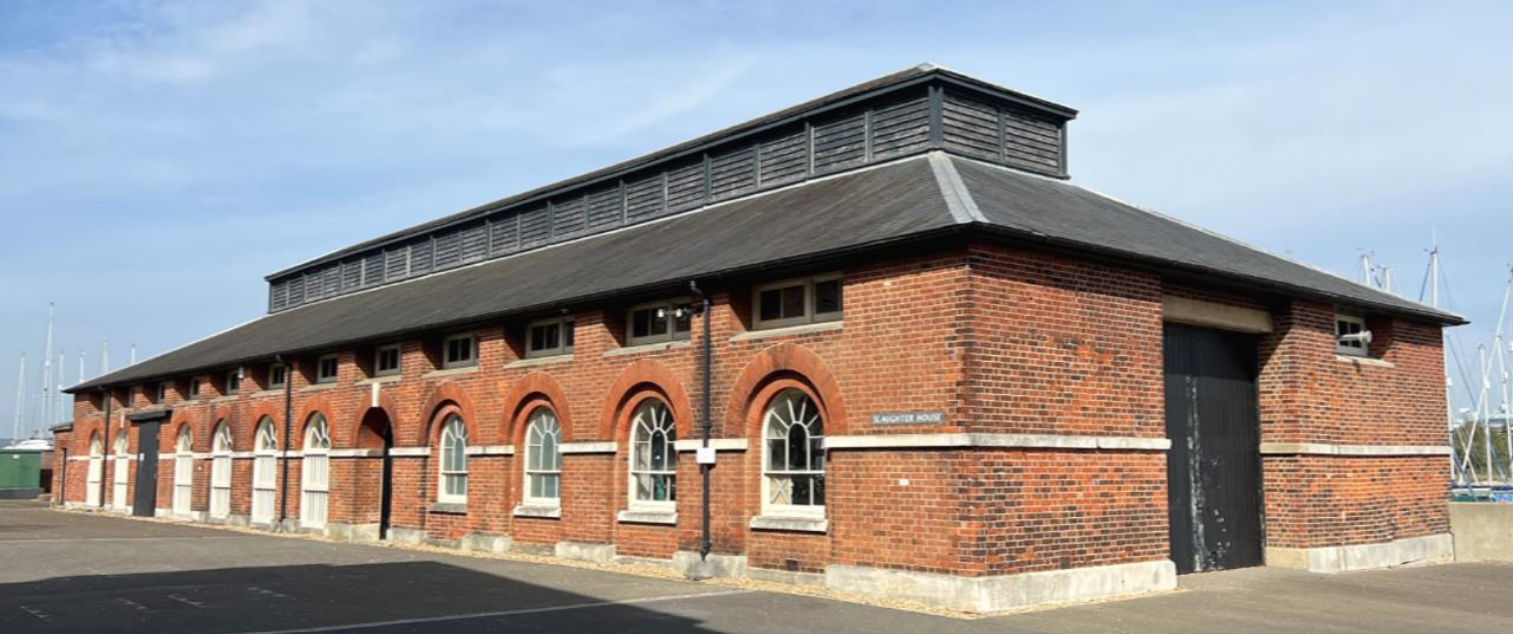
In 1905, alterations were made in raising the roof of the Slaughterhouse to add a layer of ventilation through the horizontal clerestory windows. Further recent additions include the iron beams on the partitioned wall for roof support and the steel racking in the Northern part. The main door on the South Elevation was also enlarged during the 20th century. The Slaughterhouse was in operation until the Yard closed in 1970. However, in 1982, it was reopened during the Falklands War and First Gulf War.
Timeline for the history of the Slaughterhouse
By Sophia Miller, student at the University of Portsmouth Master of Building Conservation, School of Architecture, Art and Design
Tutor- Ass.prof. Milena Metalkova-Markova
Click here for an additional comprehensive historical timeline
A photo of the Slaughterhouse
By Tijan Sanno-Berry, student at the University of Portsmouth Master of Building Conservation, School of Architecture, Art and Design
Tutor- Ass.prof. Milena Metalkova-Markova